NITDA Meets Global Tech Firm to Boost Digital Trust and Identity Systems in Nigeria
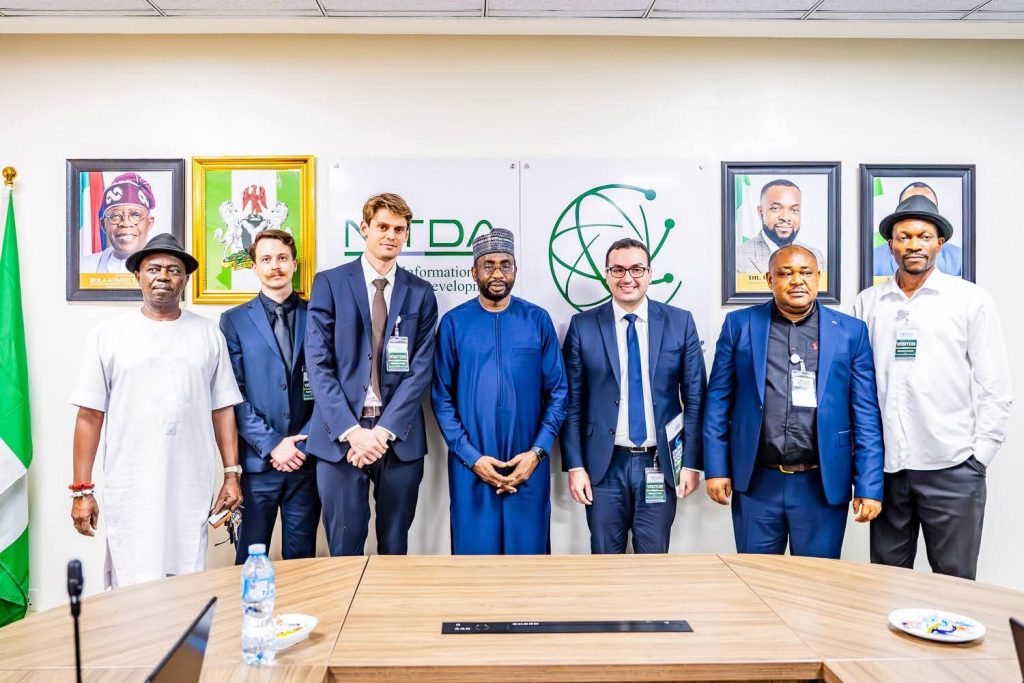
Nigeria is taking another step toward strengthening its digital economy, as the National Information Technology Development Agency (NITDA) met with international technology company TrustTAMP to explore ways of improving digital identity, cybersecurity, and trust in online services.
Daily Star Nigeria gathered that the meeting was led by NITDA’s Director General, Kashifu Inuwa Abdullahi, who hosted senior executives from TrustTAMP, including Senior Advisor Jean-Claude Gallea and Vice President Jonathan Pasha.
During the discussion, TrustTAMP explained how its technology can help governments and businesses verify identities securely while protecting people’s personal data. The company noted that it already has a presence in Nigeria, where it is working with a major telecom operator to prevent SIM swap fraud and strengthen customer security.
A key highlight of the presentation was the firm’s biometric tokenisation system — a method that allows identity verification without storing sensitive biometric information such as fingerprints or facial data. Instead, the system converts such information into secure digital tokens, making it harder for fraudsters to steal or duplicate identities. The technology is also designed to work in areas with limited internet access and on basic devices, making it suitable for Nigeria’s diverse digital landscape.
TrustTAMP said its solutions can be used for a wide range of services, including digital identity verification, reducing financial fraud, supporting transparent asset ownership for things like land and minerals, and helping people in the informal sector gain access to financial services. The company added that its technology is already being used in partnerships with organisations such as Mastercard and in projects involving banks and governments in the United States and Mexico.
In his response, Inuwa welcomed the proposal, noting that it aligns with NITDA’s focus on building a secure and trustworthy digital environment. He, however, asked important questions about how the system would fit into Nigeria’s existing national identity framework managed by the National Identity Management Commission (NIMC), whether the technology is open to wider participation, and how it would encourage innovation without giving undue advantage to a single company.
Both sides agreed to continue technical discussions to better understand how such solutions could be adapted to Nigeria’s needs.
NITDA also stressed that its role is to create policies that support innovation and investment while ensuring fair competition, rather than promoting any specific technology provider.
The meeting reflects Nigeria’s growing interest in partnering with global technology players to build safer digital systems, expand financial inclusion, and create new economic opportunities for its citizens.




About The Author