
End of an Era in Sokoto as 185-Year-Old Tortoise of Late Gov. Garba Nadama Passes On
By Mustapha Muhammad Tukur Illo
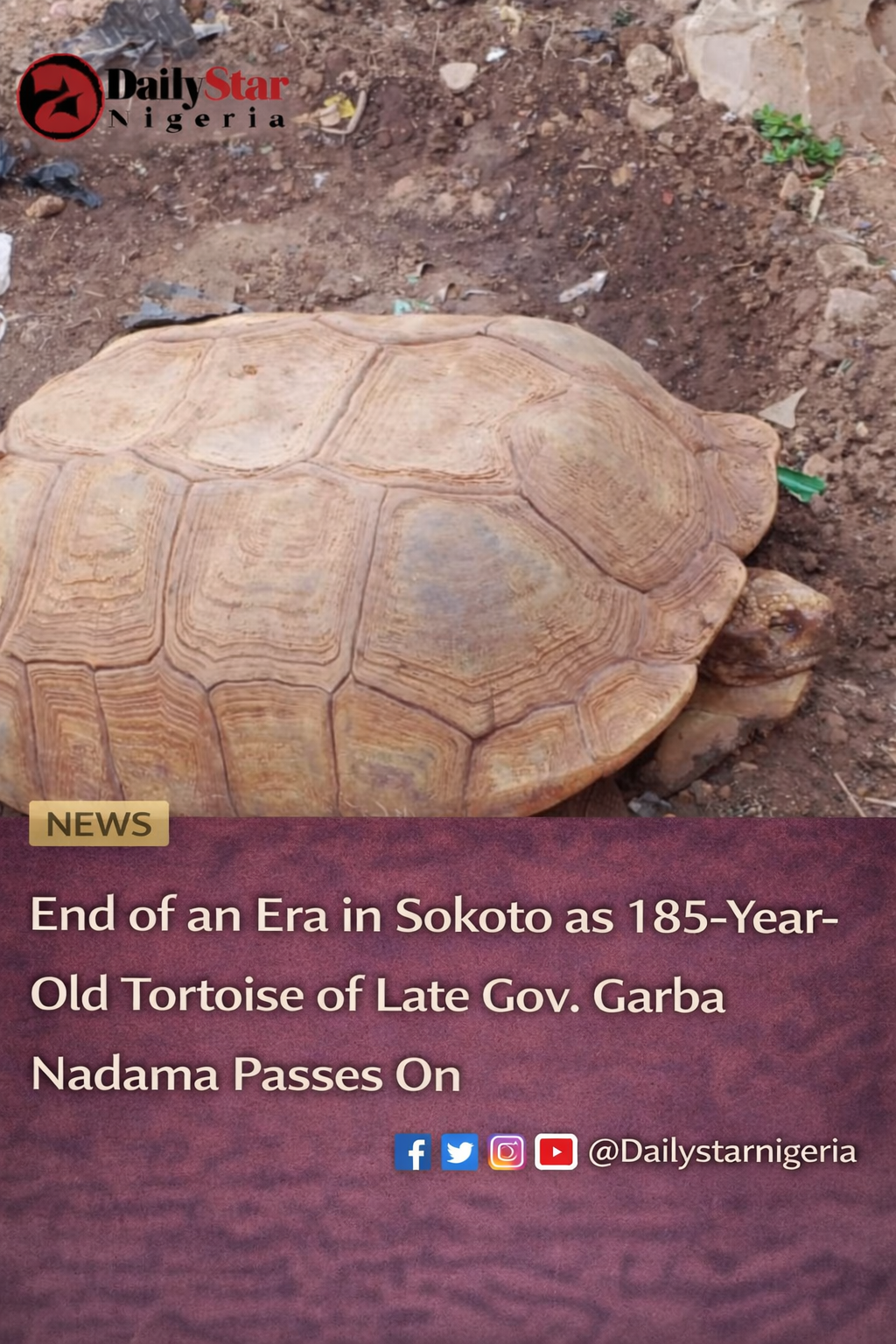
A tortoise believed to be about 185 years old has died at the residence of the late Alhaji Garba Nadama at Barth Road, Sokoto, closing a historic chapter that spanned generations of Northern Nigeria’s political aristocracy.
Family source Abdulsalam Garba Nadama who disclosed the development to Daily Star Nigeria confirmed that the tortoise passed away on February 7, 2026, at the Nadama family home, describing the reptile as “a rare heritage that lived beyond empires and governments.”
The tortoise had a distinguished lineage of ownership. It was acquired in 1987 by the late Alhaji Garba Nadama, former Governor of Sokoto State (1982–1983), from the late Alhaji Bello Maitama Yusuf, the Sardaunan Dutse — a three-time Minister of the Federal Republic and former Senator.
According to family accounts, Maitama Yusuf inherited the tortoise from his grandfather, making it a treasured heirloom passed down across generations. Though no official birth record exists, elders within the family estimate its age at approximately 185 years, placing its origin in the mid-19th century — decades before the British conquest of the Sokoto Caliphate and long before Nigeria’s amalgamation in 1914.
Residents who had seen the tortoise over the years described it as remarkably calm, often attracting quiet admiration from visitors who marvelled at its age and history.
“It was not just an animal in our compound; it was part of our story,” Abdulsalam Garba Nadama told Daily Star Nigeria. “This tortoise lived through different eras of leadership and remained a symbol of continuity in our family.”
Historians note that certain species of tortoises are known for extraordinary longevity, with some living beyond 150 years under favourable conditions. If verified, the Nadama family’s tortoise would rank among the oldest documented in the region.
Its death has sparked reflection among close associates of both the Nadama and Maitama Yusuf families, who view the reptile as a silent witness to Nigeria’s political and cultural evolution.
From the era of traditional emirates to colonial administration, and from Nigeria’s independence to modern democratic governance, the tortoise quietly endured — until its final breath on February 7, 2026.




About The Author