[OPINION] Kwankwaso’s Unbreakable Grip: Why Kano Will Rally Behind His 2027 Candidate and Send Abba Packing

By Dr. Kallah
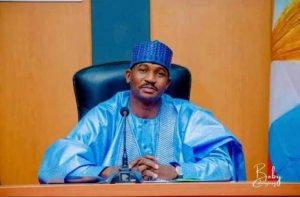
In the pulsating heart of Northern Nigeria, Kano State remains a beacon of democratic fervor where the people’s voice reigns supreme—unlike many other states where elections are mere spectacles of manipulation. The 2023 gubernatorial victory of the New Nigeria People’s Party (NNPP) under Abba Kabir Yusuf, popularly known as Abba, was no accident. It was the result of the masterful orchestration of Senator Rabiu Musa Kwankwaso, the undisputed architect of Kano’s modern political renaissance.
Abba, plucked from relative obscurity, rode to victory on the formidable waves of the Kwankwasiyya movement. Voters did not cast their ballots for an unknown protégé; they voted for the visionary leader who planned and executed the project from A to Z. As the state edges closer to 2027, Abba’s recent defection to the All Progressives Congress (APC) has exposed what many see as ingratitude. History appears set to repeat itself: Kano will overwhelmingly support whoever Kwankwaso anoints, sealing Abba’s impending defeat—a loss he has yet to fully comprehend or “celebrate.”
The 2023 election figures speak volumes. Abba secured 1,019,602 votes against APC’s Nasir Yusuf Gawuna, who polled 890,705 votes. This margin survived intense legal scrutiny up to the Supreme Court in January 2024. Yet, this victory was largely Kwankwaso’s making. As NNPP’s national leader and the party’s 2023 presidential candidate, he transformed a fledgling platform into a dominant force in Kano. Abba, his son-in-law and longtime aide, was virtually unknown to the wider electorate before Kwankwaso elevated him.
Their relationship dates back decades, from their days at the Water Resources and Engineering Construction Agency (WRECA) in the 1980s to Abba’s role as personal assistant during Kwankwaso’s first tenure as governor (1999–2003), and beyond. Kano voters wore the iconic red caps of Kwankwasiyya not for Abba, but for Kwankwaso—the man whose legacies in education, infrastructure, and empowerment continue to resonate across the state.
This is not the first time Kwankwaso has altered Kano’s political trajectory. In the 2019 governorship election, Abba, then flying the banner of the Peoples Democratic Party (PDP) with Kwankwaso’s backing, initially outpolled incumbent Governor Abdullahi Ganduje. Official figures showed Abba leading with over one million votes before the election was controversially declared inconclusive due to cancelled votes in select areas. A supplementary poll in one local government area—marred by allegations of violence and rigging—ultimately handed victory to Ganduje. Many saw it as a calculated maneuver that robbed Kwankwaso, through Abba, of a deserved win. The electorate did not forget. That perceived injustice only strengthened public resolve, culminating in the 2023 redemption.
Now, in 2026, the rift has widened into a chasm. Abba’s defection to the APC—reportedly influenced by Ganduje and a desire for “independence”—is widely viewed as a betrayal. Kwankwaso has rightly described it as a “mistake” that will hand victory to true loyalists on a platter. While Abba may have been promised an automatic ticket by APC power brokers, including Deputy Senate President Jibrin Barau, such federal muscle counts for little in Kano. Here, votes are cast and counted—genuinely, transparently, and decisively.
Unlike states plagued by ballot stuffing or voter intimidation, Kano’s electorate is vigilant. Loyalty here is tied to individuals and legacies, not fleeting party labels. Kwankwaso’s resilience is legendary. In response to this political “tectonic shift,” he has opened loyalty registers and explored strategic alliances to consolidate the NNPP’s base. His prediction of Abba’s defeat appears grounded in political reality; without the Kwankwasiyya machinery, Abba’s chances are slim.
Just as Kwankwaso picked Abba from obscurity in 2023 and propelled him to victory, he will select another candidate in 2027—perhaps another unassuming loyalist—and the people will follow. The red-capped masses, empowered by Kwankwaso’s grassroots vision, prioritize a leader with a proven record over self-serving defectors.
Abba may yet be basking in APC’s warm embrace, but Kano is not like other states. Here, the people’s will prevails—unyielding and unmanipulated. The lessons of 2019 fueled the fire; 2023 proved Kwankwaso’s enduring influence. Come 2027, expect a familiar outcome: Kwankwaso’s candidate will triumph once again, reaffirming that in Kano, true leadership endures, while betrayal fades into obscurity. The stage is set for a Kwankwasiyya resurgence—a victory of the people over political opportunism.




About The Author